
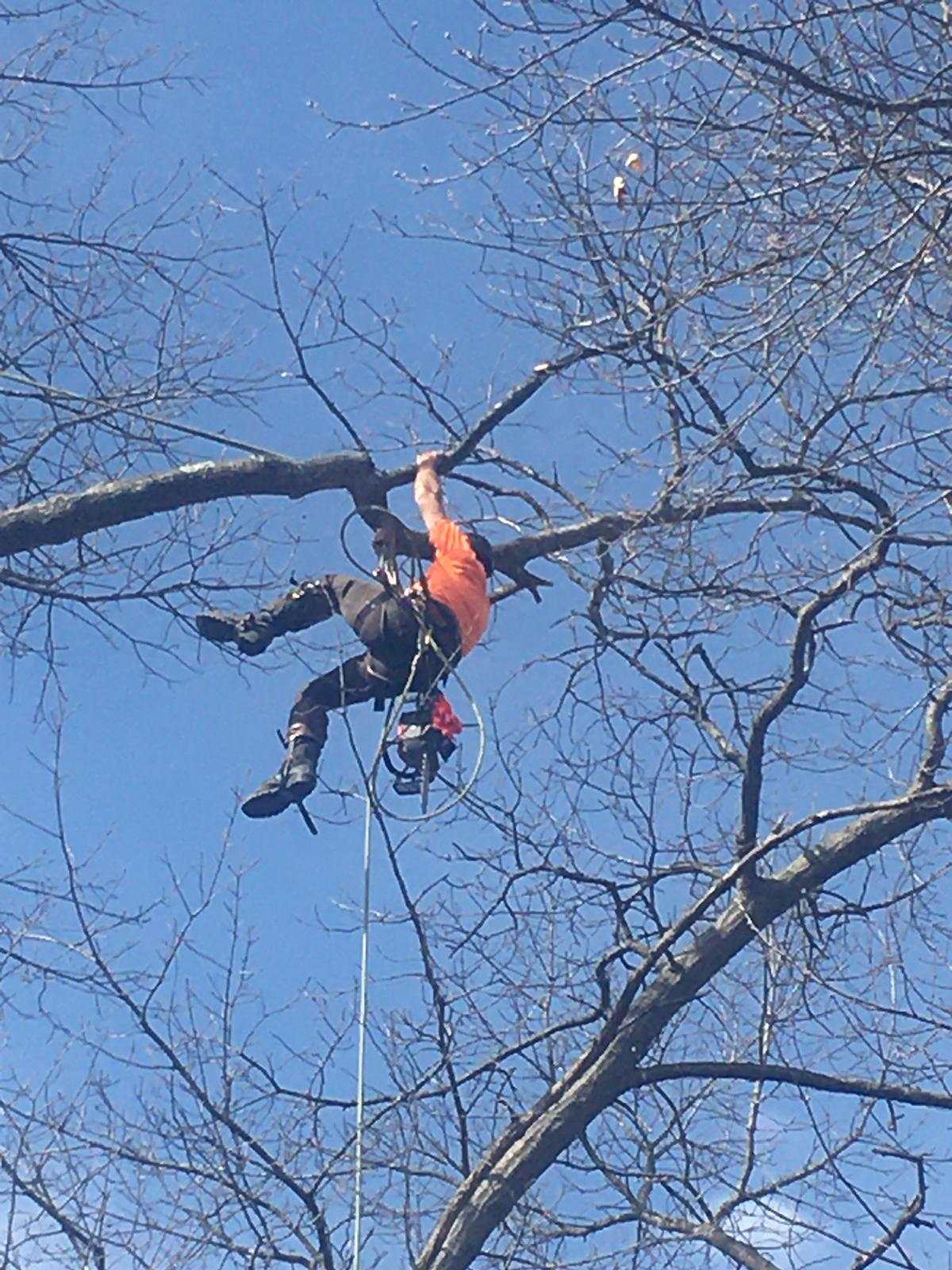
What gets trimmed, and why
People use trimming and pruning to mean the same thing. We split them like this. Trimming is about clearance: getting limbs away from the roof, the chimney, the driveway, the service wire, the neighbor's side of the fence. Pruning is about the tree: taking out dead, cracked, crossing and weak branches so the tree is healthier and less likely to drop something on you.
Most visits are some of both. The common jobs:
- Deadwood removal in mature maples and oaks. Dead branches are the ones that come down in wind, and they come down without warning.
- Roof and house clearance. Limbs that touch the house scrape shingles, hold moisture against the siding and give squirrels a bridge to your attic.
- Raising the canopy over a driveway or lawn so trucks, mowers and people fit under it.
- Reducing long, heavy limbs that reach over a roof or a play area, so they carry less weight in snow and ice.
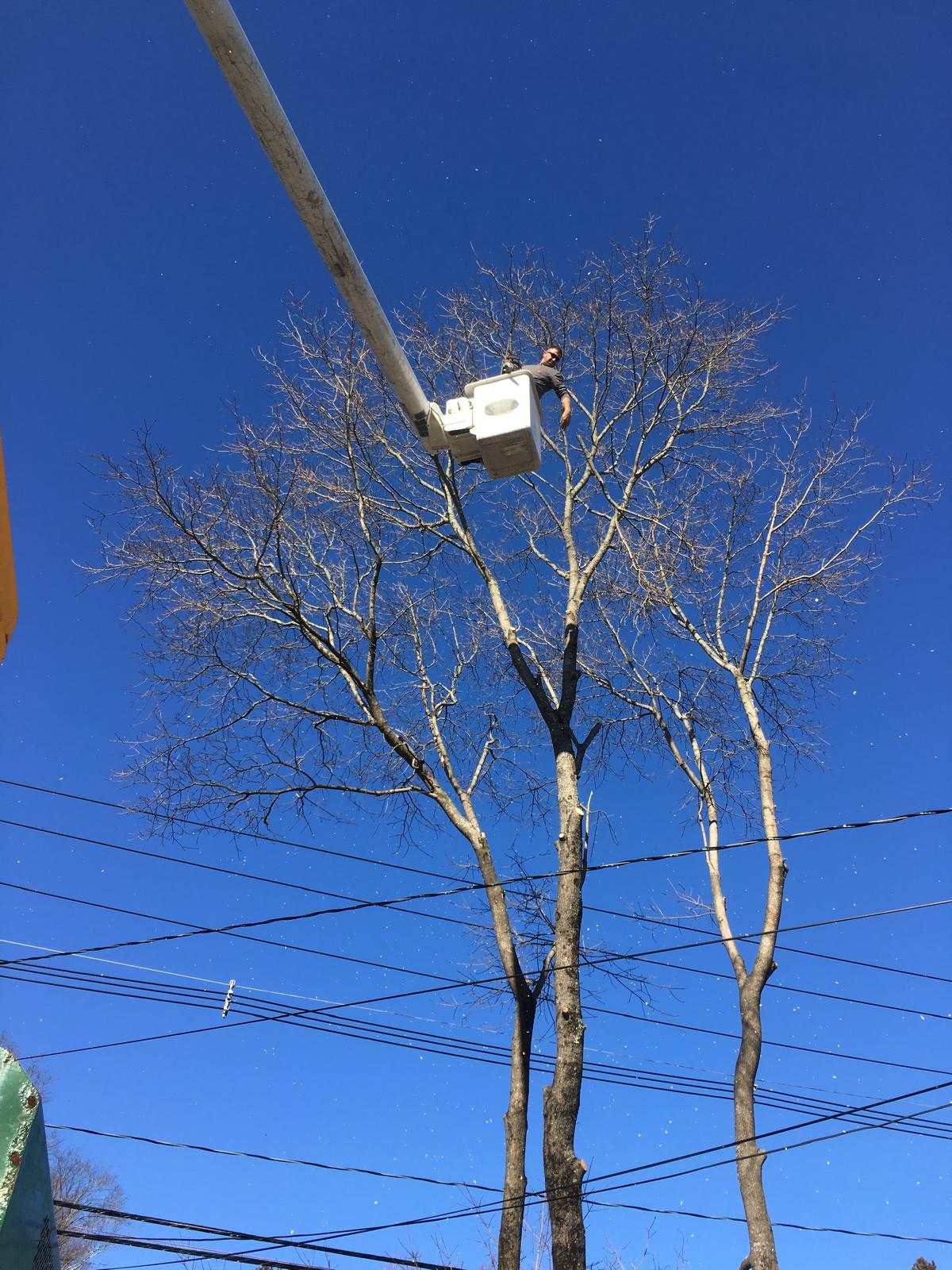
- Clearing around the wire that runs from the pole to your house.
“The crew was very careful with my maple tree and surgically removed the dead branches that I was concerned about. All the equipment needed they brought, a crane, a bucket truck, and a chipper.”

Cuts that help the tree, and cuts that hurt it
A proper pruning cut is made just outside the collar where the branch meets the trunk, so the tree can seal over the wound. A flush cut or a long stub both rot. We do not top trees. Cutting the whole crown back to stubs is the fastest way to ruin a healthy tree: it answers with a thicket of weak shoots that break in the first heavy snow, and the stubs decay back into the trunk. If a tree is too tall for where it stands, the honest choices are a careful reduction or removal, and we will tell you which one makes sense.
We also do not strip the inside of a tree and leave tufts at the ends of the limbs. It looks tidy for a season and it shifts all the weight to the tips, which is exactly where you do not want it in an ice storm.
When to prune in Massachusetts
Late fall through winter is the best window for most hardwoods. The leaves are off, so the structure is easy to read, the ground is often frozen, which protects the lawn, and the tree is dormant. Oaks in particular are best pruned in the cold months. Dead, broken and dangerous limbs are a different matter: take those out whenever you find them. Maples pruned in late winter will drip sap for a while. It looks alarming and does the tree no harm.
Small jobs are fine
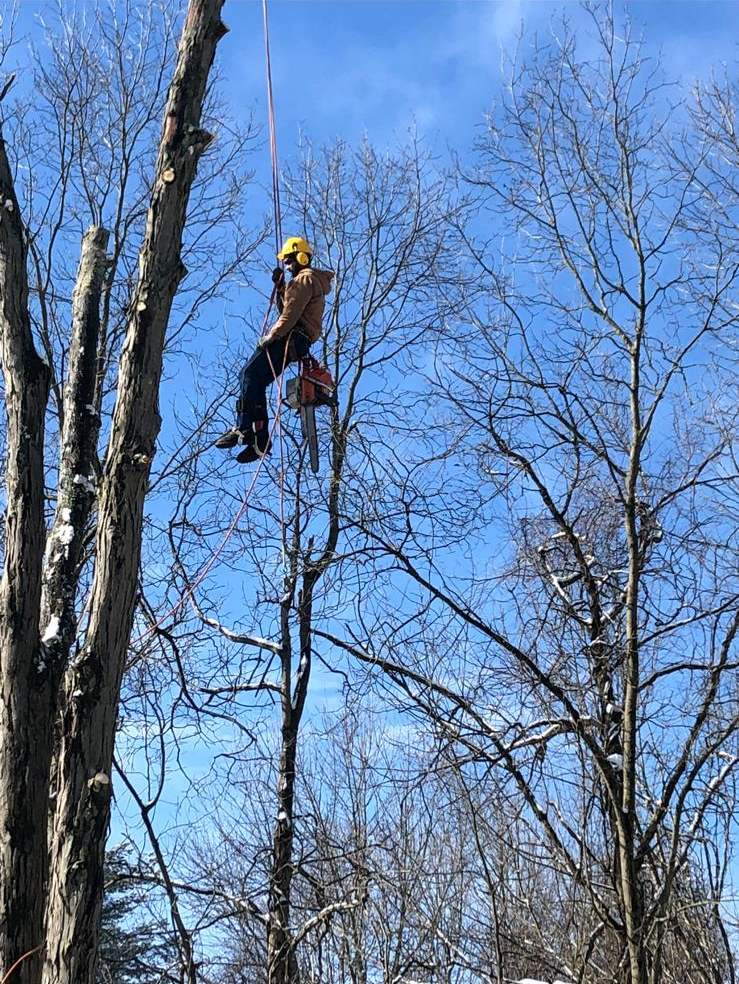
You do not need a yard full of work to call. One of our favorite reviews is from a ham radio operator who had branches sagging toward his antenna. One climber, one tree, a fair price.
“One of Adam's crew climbed the tree and cut down the dangerous branches. Fair price for a small (but important) job.”
Questions about trimming and pruning
How often should trees be pruned?
Mature shade trees near a house are worth a look every three to five years, and after any storm that brought limbs down. Young trees benefit from light structural pruning in their first ten years, which saves a lot of trouble later.
Can you trim my neighbor's tree where it hangs over my yard?
In Massachusetts you may generally cut branches back to your property line as long as you do not harm the health of the tree, and you cannot go onto the neighbor's land without permission. It always goes better if you talk to them first.
Do you work on commercial properties?
Yes. Recent jobs include a half acre dog daycare and a community center with a parking lot full of cars to protect. We schedule around your opening hours.
Will you haul everything away?
Yes. Everything that comes out of the tree goes through the chipper or onto the truck, and the ground is raked and blown clean.